

The roots of the noise
Before “rev bombs” became the default party trick at every random bike meet, there was actually a culture and context behind loud motorcycles. In 1970s–80s Japan, Bosozoku gangs turned modified bikes and outrageous exhaust notes into a language of rebellion, identity, and territory. Their bikes were tuned to be obnoxiously loud on purpose, and the sound was part intimidation, part performance, and part protest against a stiff, conformist society.
Out of this scene came “sound battles”, riders using throttle, clutch, and rev-matching to create rhythmic, almost musical patterns with their engines. It was still antisocial in many ways, but within that subculture, there was a strange craft to how they chased a particular sound, a particular rhythm, and a very specific aesthetic.

From rebellion to empty noise
Fast forward to today, and most of what passes as “revving culture” at motorcycle festivals, city cafes, and late-night streets has lost all of that context. In many places, riders are not channeling some deep subculture; they are just yanking throttles on stock or badly-modded bikes in crowded public spaces, without any thought to people around them. The result is not rebellion, not art, not community, just nuisance.

Studies consistently show that motorcycle noise is perceived as more annoying than other road traffic noise at the same volume. This heightened annoyance spikes stress and irritation among people who have to listen to it, especially when motorcycles are revved aggressively and unpredictably. Authorities worldwide are cracking down on noisy and illegally modified exhausts because residents are fed up with sudden, sharp blasts disrupting their daily lives. What some riders think of as “showing passion” often just comes across as disrespectful to everyone else. An issue that’s very much evident during motorcycle festivals in places like Goa too.
What the motorcycle community should stand for
As riders, it is important to admit this: pointless revving in a crowded venue is not “biker culture,” it is just bad behavior in biker clothing. Around the world, even other motorcyclists are calling this out as pathetic and annoying, because it makes all riders look like inconsiderate attention-seekers. It is the kind of thing that gets more restrictions, more checks, and more hate aimed at everyone who rides, including the ones who are actually responsible.
Motorcycling at its best is about flow, control, and connection. with the machine, with the road, with the people you ride with and the places you ride through. The sound of a motorcycle on a good line, with clean shifts and precise throttle, will always be more beautiful than a stationary engine mercilessly bounced off the limiter. Thoughtful riders do not need to scream for attention; their riding speaks loud enough.
Read More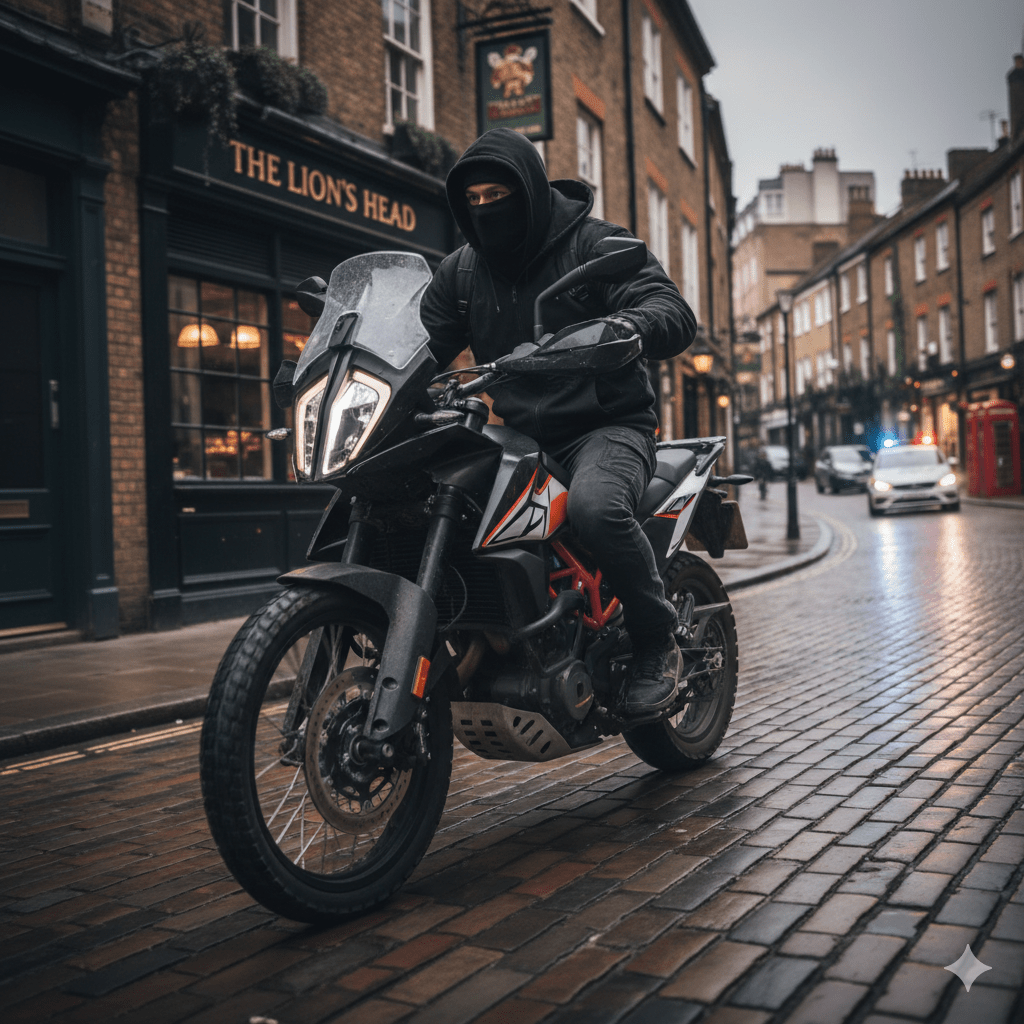
On February 14, 2014, my Yamaha R15 was stolen. The heartbreak I felt was indescribable. I spent days running from pillar to post. I wanted to get the police report filed. I desperately hoped the police find my motorcycle. Adding to my distress was the fact that I still had a year left to pay off the EMI. The feeling of owing money on a vehicle that was no longer in my possession was gut-wrenching.
Despite all efforts, my first motorcycle, the one I’d bought with my own hard-earned money, was never found. The process with the police and insurance dragged on for months. I eventually received a partial settlement from the insurance, but the emotional loss lingered long after. I was without a motorcycle for almost two years, gathering my finances before I could buy another. That bike was more than a vehicle; it was a symbol of freedom, achievement, and deeply personal journeys.
I share this story now for a reason. Recently, I’ve noticed many crowdfunding campaigns popping up. Travelers lose their vehicles when they are stolen during trips. Then, they ask the public to sponsor a new vehicle to continue traveling. I genuinely empathize with the shock and pain such a loss brings, especially when valuables and cash are lost too. It’s a stressful, disempowering situation. The first steps in such a crisis are always clear. Report the theft immediately to the nearest police station. File an FIR. Notify the insurance company. Each of these actions is vital for any hope of recovery or compensation. Then, reach out to friends, family, or well-wishers for enough help to return home and regroup safely.
What feels out of step to me, however, is asking strangers to finance a replacement vehicle. The financing request is solely for the purpose of resuming personal travel plans. Travel is a privilege, an aspiration, not a right. Seeking help in a moment of crisis to get out of harm’s way or to make it back home is valid. It is compassionate. Still, expecting the public to underwrite the cost of resuming a private journey crosses a line for many. In these situations, community support is best directed towards immediate, essential needs, shelter, safety, and getting home. Not towards fulfilling lifestyle aspirations.
Empathy is essential. Anyone who’s lost something so meaningful can imagine the pain. The best course for one’s own growth is to first focus on recovery and personal safety. This approach preserves the spirit of community support. Regrouping and personal safety are priorities, not continuing what was a discretionary journey by its nature. Resilience often means regrouping, reassessing, and returning stronger, without shifting the burden of personal dreams onto the kindness of strangers.
Let’s ensure our support is compassionate and fair. We must keep safety and regrouping in focus. Facing loss with courage maintains dignity in crises.
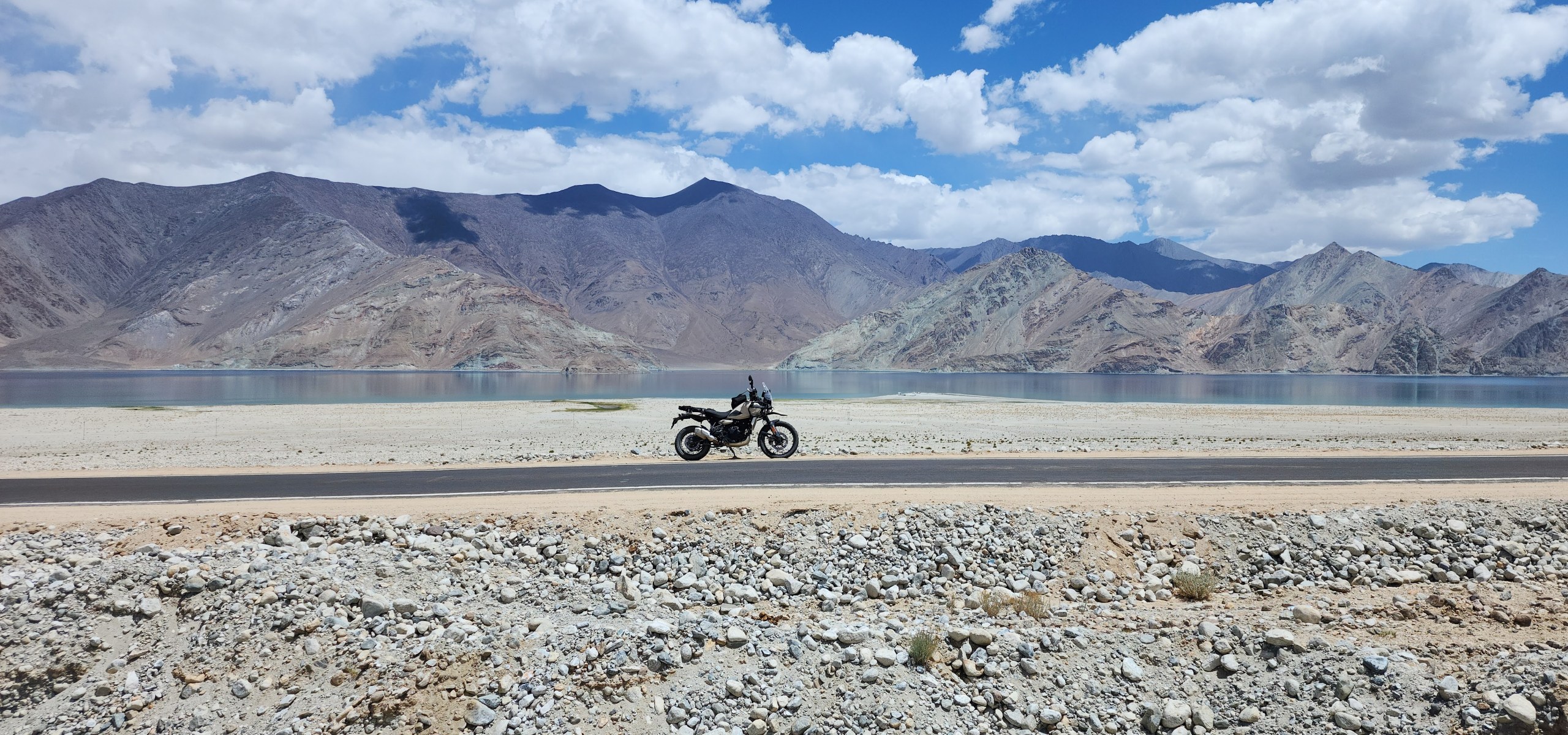
Let me tell you about the day I picked up my Himalayan 450. I’d been riding the old 411 for five years. That trusty thumper taught me everything about adventure riding. I loved that motorcycle—it was a tractor. It would simply chug along no matter what terrain you threw at it. It was simple, honest, and carried me through some epic rides across our incredible country.

The Moment I Knew Things Had Changed
The first time I fired up the 450 was in Goa, during Motoverse, before the official launch. Something was different right away. It wasn’t the old-school Royal Enfield that would rattle my mirrors. Instead, I got this smooth, refined purr that honestly made me question if I was still riding a single-cylinder thumper.
My real test came about six months later, on a ride into the Himalayas. I took the exact route I’d done multiple times on the 411. This time… man, it felt like I was riding a completely different machine.
Those Mountain Trails Changed My Perspective
You know that feeling on the 411 when you’re climbing endless switchbacks and high passes? The engine struggles to breathe, especially climbing towards Umling La. You’re constantly feathering the throttle, coaxing it along.
Well, throw all of that out the window with the 450.
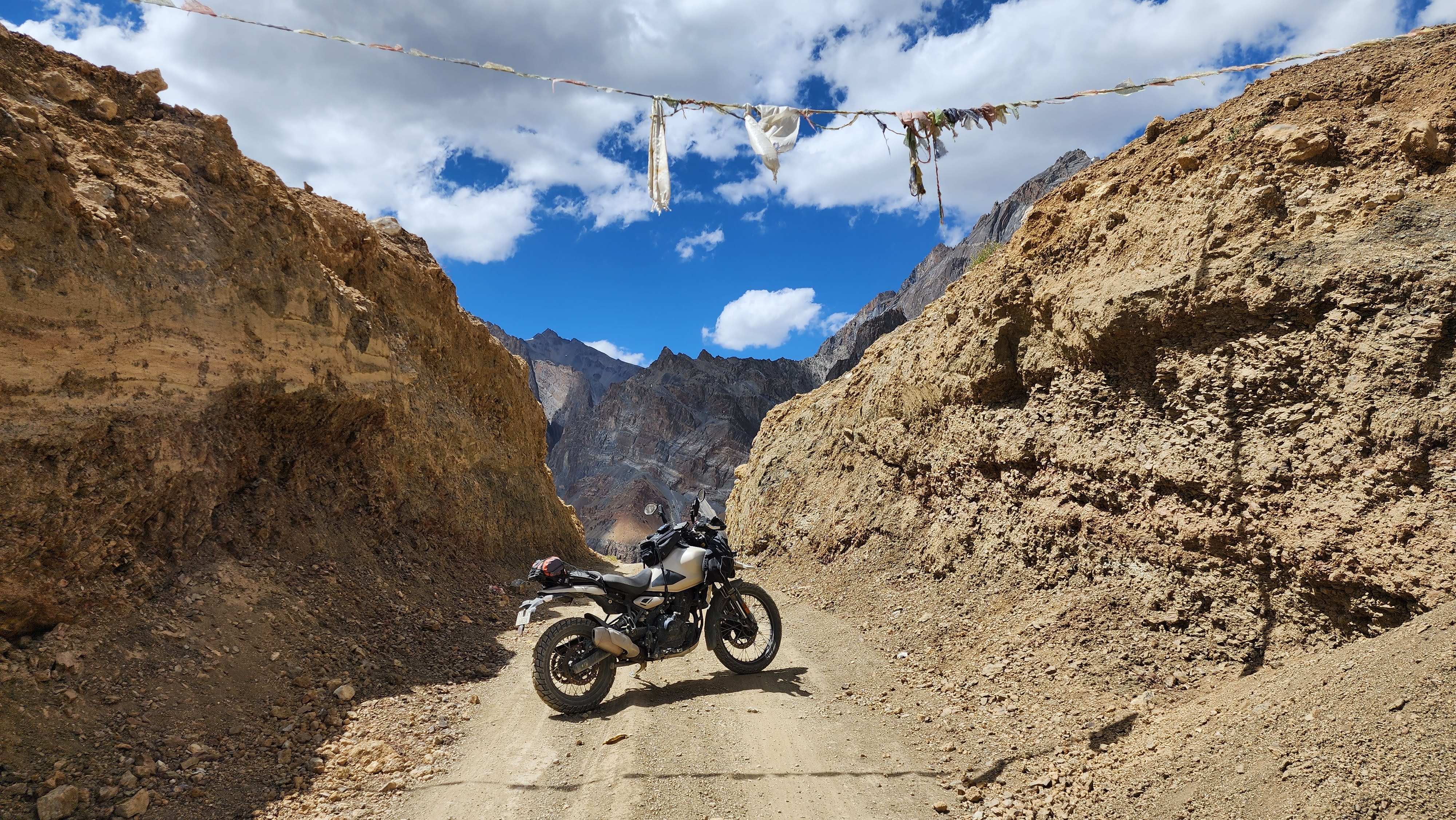
I remember one steep, loose-gravel climb that always got me anxious on the 411. On the 450, I just pointed it uphill, rolled on the throttle, and the motorcycle pulled cleanly, smoothly, without any drama. It almost felt boring because it was just that effortless.
And the comfort, I can’t stress this enough. My 411 had a custom Zedling suspension setup that worked brilliantly. But the 450? That Showa SFF suspension is probably one of the best-tuned stock suspensions I’ve ever ridden. Straight from the factory, with zero tinkering, it just works.
Highway Riding: Night and Day Difference
This is where the 450 really showed its colours. Remember how the old Himalayan would be shaking itself silly at 100 kmph? And overtaking meant plotting your move two kilometres in advance and praying something didn’t come in the opposite lane? Of course, I’d fixed some of that on my 411 with the Booster Plug and other mods.
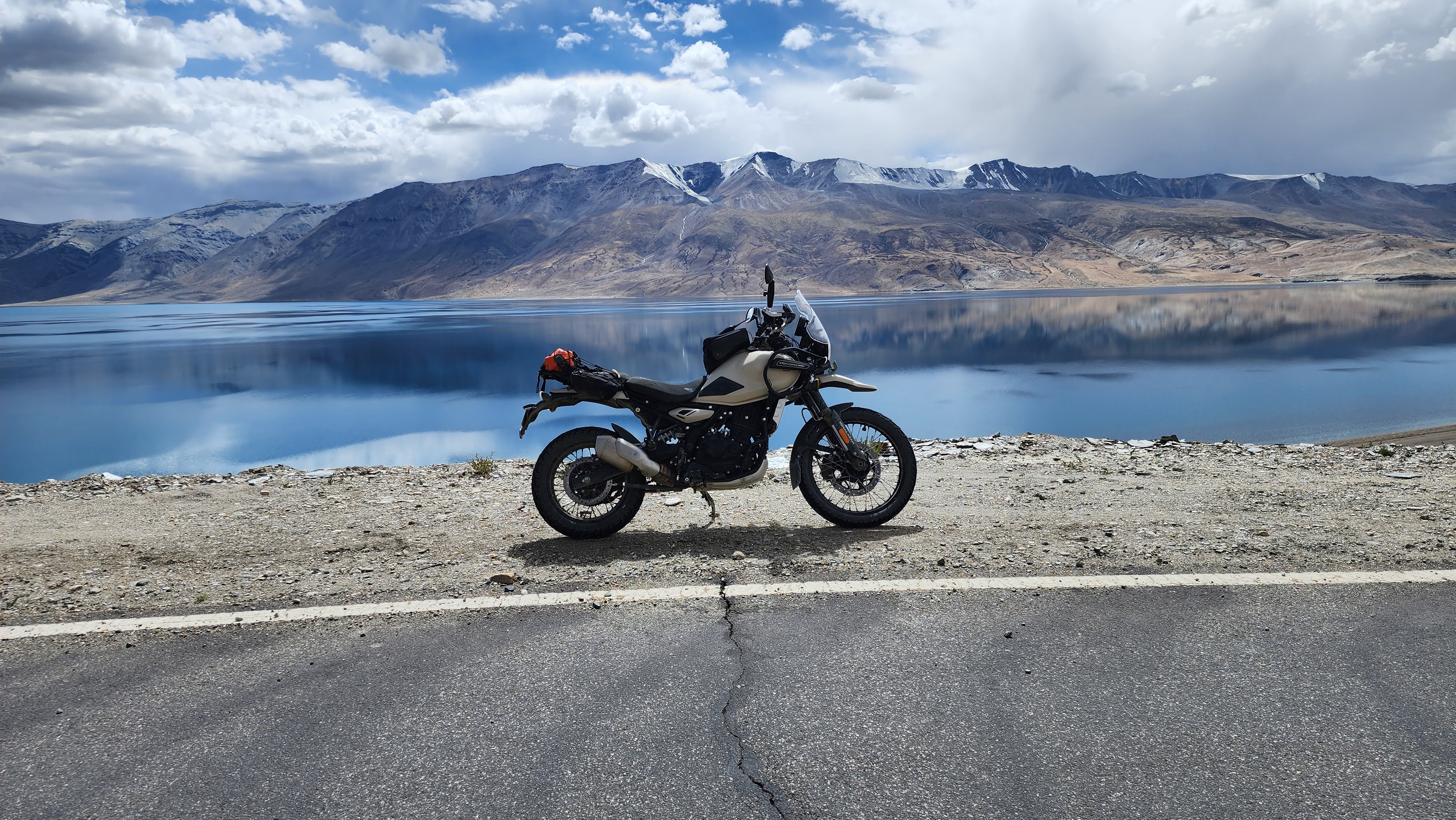
But on the 450, I found myself cruising effortlessly at 130–150 kmph. The bike was so composed, so smooth, that I had to glance at the speedometer to believe it. Overtaking became… trivial. Just a simple downshift and you’re past. And this, remember, was on a stock setup.
The Little Things That Matter
It’s funny how you don’t realize what you’re missing until you experience something better.
The Instrument Cluster: The new color TFT screen is clear, loaded with essentials, and pairs with your phone for maps. The old compass on the 411 had a mind of its own—good riddance.
The Tank: The 450’s narrower tank means I can actually grip it with my knees during off-road sections.
The Seat: The stock seat isn’t perfect, but it’s miles ahead of the mushy perch on the 411. Plus, RE now offers factory seat options—rally, touring, and even a lowering seat. Game changer.
Where It’s Not Perfect (Let’s Be Real)
Like I said, I’m not here to sell you a brochure. The 450 does have a few flaws:
- The headlight is useless, period.
- That stock seat could still use more padding (I bought both the rally and touring seats).
- The stock windscreen? Too short. The tall windscreen is perfect, it cuts helmet buffeting while still letting air cool the body.
- The front feels a little nose-heavy when hopping over obstacles. Technique helps, but you’ll notice it.
- It leans too much on its side stand; the 411 stood almost too straight, this one’s the opposite.
- Throttle response has a slight lag—thanks to emissions tuning. Nothing abnormal post-BS4. I’ll be working on a solution.
Then there’s the price. At ₹3.5 lakh on-road (Bangalore, Dec 2023), it’s about a lakh more than what I paid for my 411 in 2019. But honestly? That lakh actually buys you good equipment and usability—not just paint jobs and stickers.
The Competition? Yeah, I’ve Ridden Them Too
A buddy handed me his 2025 KTM 390 Adventure a few weeks ago. Over a lakh more expensive. It’s fast, loaded with tech—cruise control, fancy TFT, electronic aids, you name it.
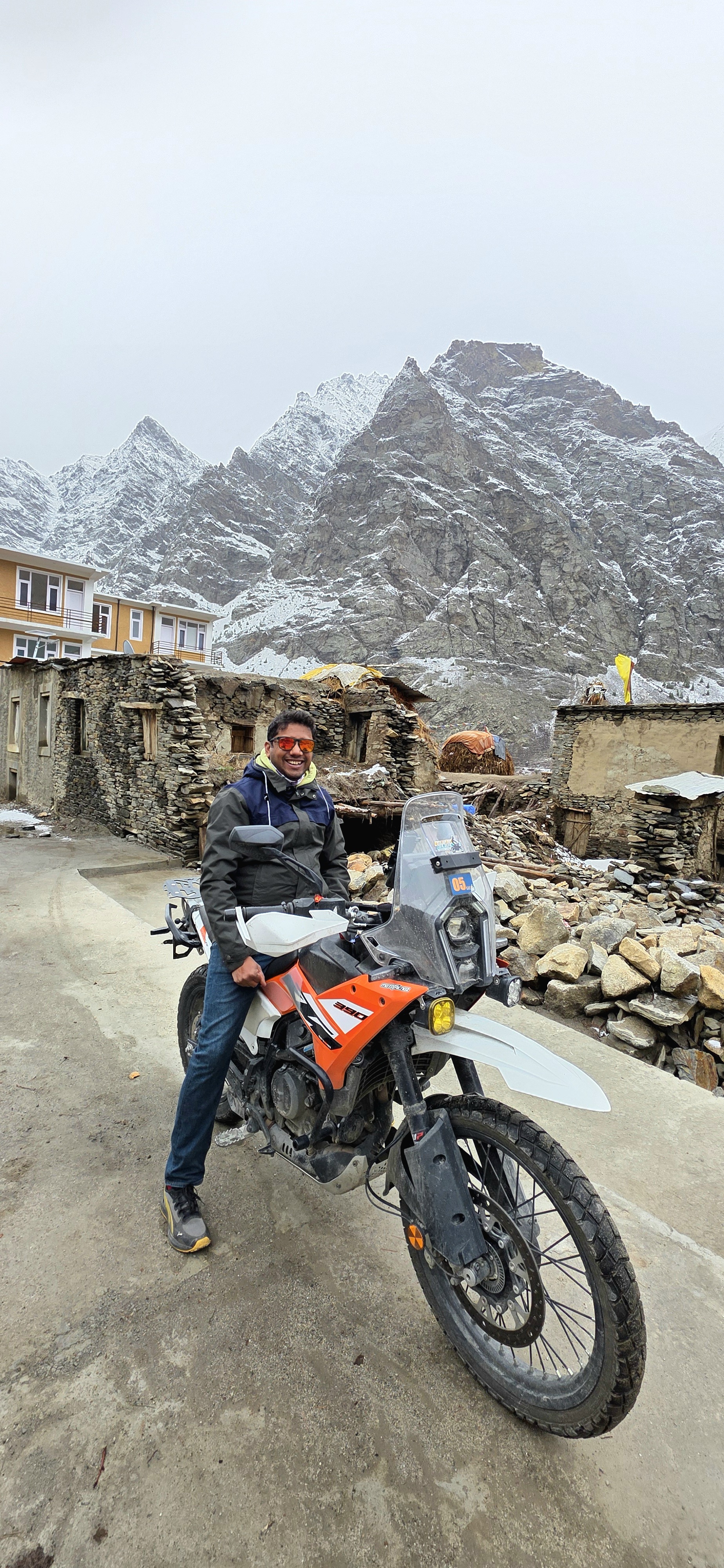
But after 200 km, I was itching to get back on my Himalayan. Not that the KTM is bad—the 390 Adventure feels like a sport bike disguised as an ADV. The Himalayan, in contrast, feels like it was made for Indian touring, even with a pillion.
Remove the tank frame and tail rack, and the RE practically sheds the KTM’s weight advantage. Plus, the KTM really needs luggage add-ons to be touring-ready, while the Himalayan is already built with that purpose in mind.
The KTM might look sharper on paper; the Himalayan just feels right. It connects.
My Honest Take
20 months. 10,000 kilometres. Add a few broken bones in between (off the bike, long story).
And I can say this—the Himalayan 450 has ruined me. Every time I see my old 411 parked in the garage, I feel a pang of nostalgia. But there’s no going back. The 450 does everything the 411 did—only better. Way better. I eventually sold my 411. That says a lot, because anyone who’s ridden my tuned 411 knew it was special.

The 450 is comfortable enough for Bangalore traffic, capable enough for serious off-road trails, and smooth enough for long highway runs. I recently even did a Bangalore – Pune ride in the monsoons on rough highways, it was a breeze.
If you’re on the fence about upgrading from your 411, or thinking of the 450 as your first ADV, stop overthinking. The 411 is a tractor, and many of us loved it for that. The 450? It’s still a tractor, just one on steroids.
The Bottom Line
Royal Enfield didn’t just update the Himalayan; they reimagined what an Indian ADV should be. It doesn’t try to mimic a European tourer or a Japanese sport-tourer. It’s unapologetically made for our roads, our riding conditions, and our adventure dreams.
Honestly? It’s almost blasphemous to still call it the Himalayan. It feels like an entirely new motorcycle.
And that’s exactly what we needed.
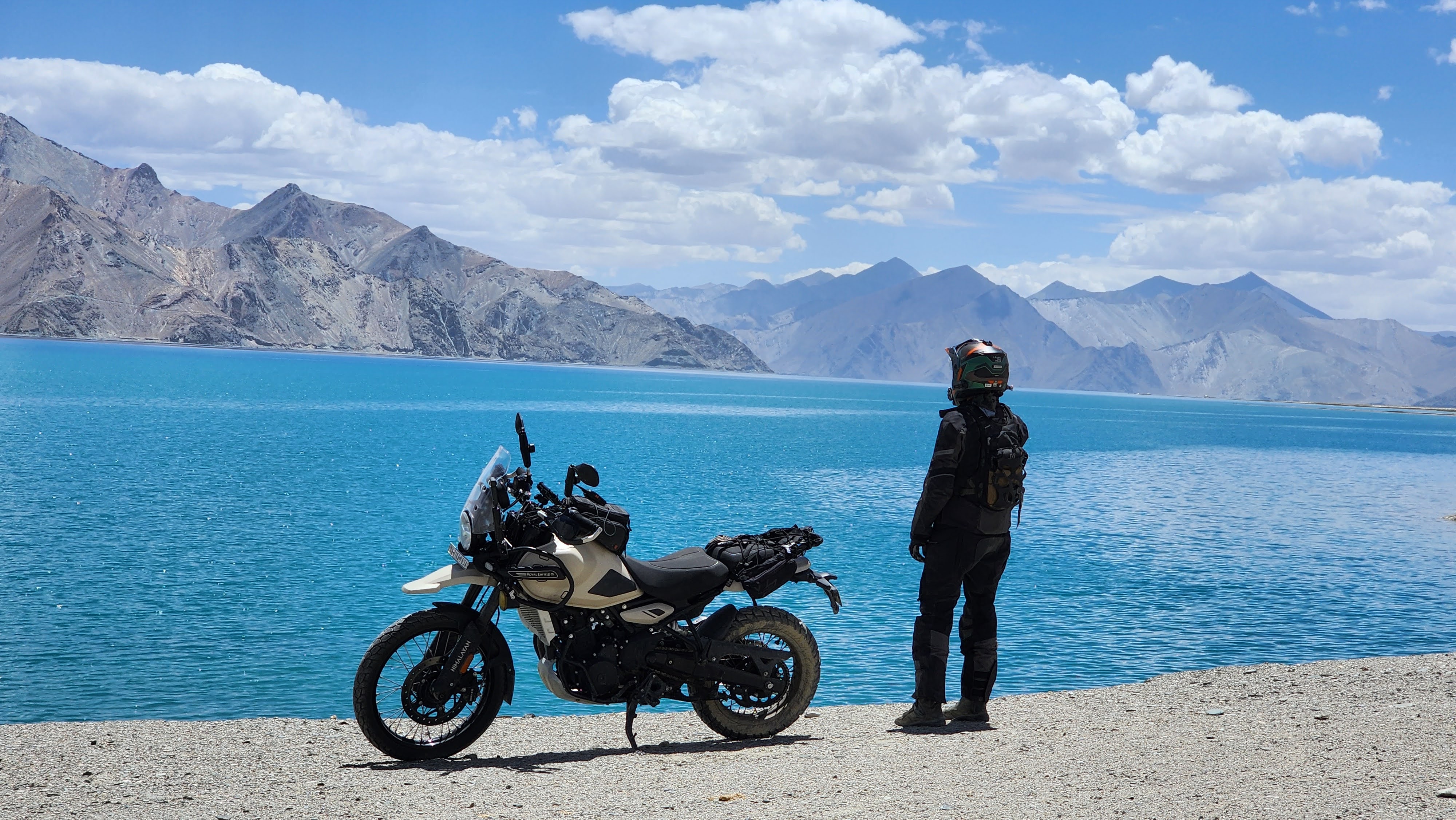
It’s a great time to be a motorcycle traveller in India. A ton of options are hitting the market, and I always say this: the best motorcycle is the one in your garage.
Ride safe, ride far.
PS: Maintenance has been simple, just like the old 411. Same RE affordability, but with way more refinement. Perfect for folks like me who love cleaning chains, tinkering, and doing the basics ourselves. It’s still a fixable, honest machine at heart.


 LEAVE THE ROAD